
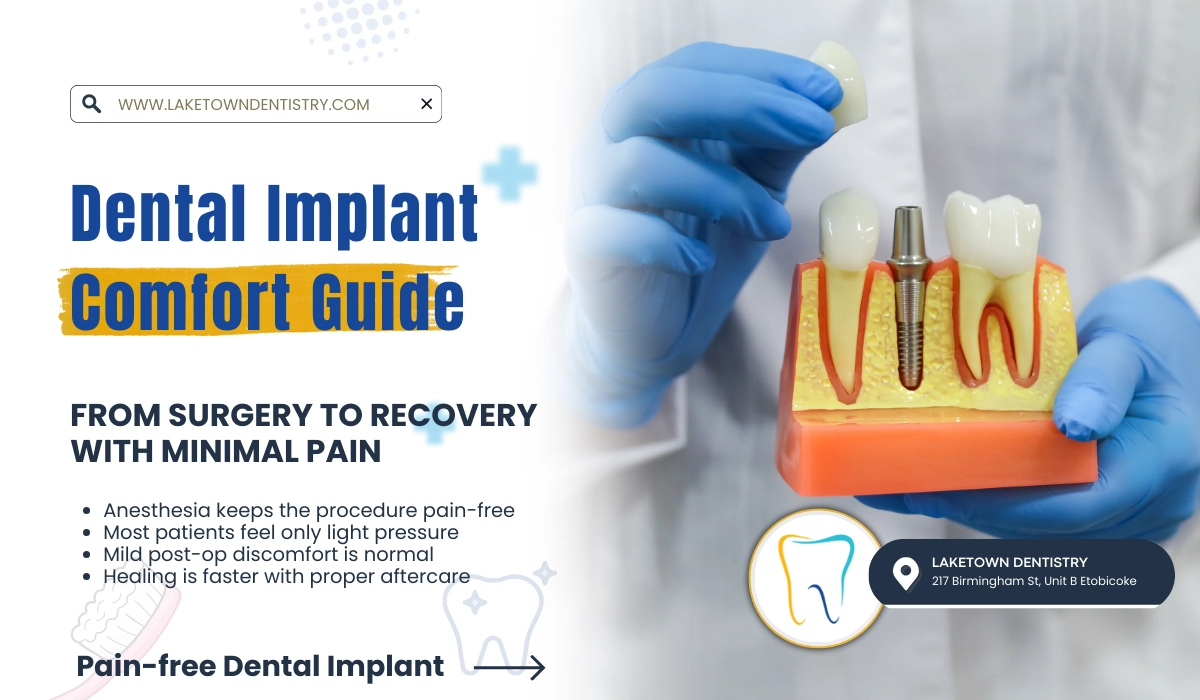
Many people considering tooth replacement want to know one thing first: Are dental implants painful? In most cases, the answer is no. Dental implants are placed under local anesthesia, so you feel pressure but not sharp pain during the procedure. After the appointment, mild soreness or swelling is normal for a few days and can be managed with common pain relievers. Most patients at Laketown Dentistry say the experience is far easier than they expected and often more comfortable than having a tooth removed.
Understanding what actually happens during the implant process can help reduce anxiety and give you confidence about your treatment. This guide explains the complete step-by-step process, what level of discomfort is normal, and how to make your recovery as smooth as possible.
What Are Dental Implants
A dental implant is a titanium post that replaces the root of a missing tooth. It is placed in the jawbone where it naturally bonds with the bone. After the healing period, an abutment and a custom crown are added, completing your new tooth.
Implants are well known for their strength, natural appearance, and long-lasting results. At Laketown Dentistry, each implant is designed to blend with the surrounding teeth so the final result looks and feels completely natural.
Do Dental Implants Hurt
The idea of surgery may make some patients worry about pain, but dental implant placement is usually very manageable. Local anesthesia completely numbs the treatment area. This means you feel movement and pressure but not pain. Many patients are surprised by how quick and comfortable the appointment feels.
Once the anesthesia wears off, mild tenderness, swelling, or stiffness may appear. These symptoms are temporary and usually last only a few days. Your dentist will provide recommendations for pain relief to keep you comfortable throughout the healing period.
The comfort-focused approach at Laketown Dentistry ensures that each patient receives personalised care and support from consultation through recovery.
Step-by-Step Guide to the Dental Implant Procedure
1. Consultation and Evaluation
The first visit includes a dental exam, medical history review, and digital X-rays or scans. This step is completely painless and helps determine whether implants are the right option for you. Your dentist will also explain the procedure and discuss sedation if needed.
2. Tooth Extraction if Required
If a damaged tooth needs to be removed before placing the implant, it will be done during a short visit. Local anesthesia prevents pain during the extraction. You may experience mild soreness afterward, which is easily managed with medication and proper care.
3. Implant Placement
This is the main step of the procedure. The gum is gently opened, and the titanium implant is placed into the jawbone. Since the area is fully numbed, patients usually feel only light pressure or vibration. The appointment is often quicker than expected.
After the procedure, mild swelling or tenderness may occur for the first 48 hours. The team at Laketown Dentistry provides detailed aftercare instructions to help you stay comfortable.
4. Healing and Osseointegration
Over the next several months, the implant fuses with the jawbone. This stage does not cause pain and does not interfere with your daily routine. Most patients return to work the next day and resume normal activities quickly.
5. Abutment Placement
Once the implant has fully bonded with the bone, a small connector piece called an abutment is placed. This minor procedure is done with local anesthesia and is typically comfortable.
6. Crown Placement
The final step is attaching your custom-made crown. This part of the process does not involve pain or recovery time. You leave the office with a complete, functional, and natural-looking tooth.
Pain Timeline After Dental Implants
First 24 to 48 Hours
You may notice minor swelling, tenderness near the gum line, and slight bruising. Using ice packs, eating soft foods, and taking recommended medications help ease discomfort.
Days 3 to 7
Most swelling and soreness begin to improve. Patients often feel almost back to normal by the end of the first week.
Week 2 and Beyond
Any remaining irritation usually disappears. Routine activities, including chewing and brushing, feel completely normal.
When Discomfort May Indicate a Problem
Although complications are uncommon, call your dentist if you notice persistent swelling, increasing pain, fever, or a foul taste. Early evaluation helps prevent further issues. The follow-up system at Laketown Dentistry ensures patients feel supported and monitored throughout the healing process.
How Dentists Help Manage Pain and Keep You Comfortable
Modern implant dentistry focuses strongly on patient comfort. Here are the key ways dentists manage discomfort:
- Local Anesthesia
This numbs the treatment area completely during surgical steps.
- Sedation Options
Patients with dental anxiety may choose nitrous oxide or oral sedation to stay calm and relaxed.
- Medication Guidance
Most patients only need over-the-counter medications like ibuprofen or acetaminophen. Prescription options may be provided if needed.
- Aftercare Instructions
Effective care helps prevent discomfort. These instructions include using ice packs, eating soft foods, avoiding smoking, and keeping the mouth clean.
Tips for a Smooth and Comfortable Recovery
- Follow all aftercare instructions from your dentist
- Eat soft foods such as yogurt, smoothies, pasta, or soups
- Avoid chewing on the implant side for several days
- Keep the area clean and maintain gentle brushing
- Attend follow-up visits so your dentist can check healing progress
Good oral hygiene and healthy habits help ensure the implant heals correctly and comfortably.
Are You a Good Candidate for Dental Implants
You may be a strong candidate if you have healthy gums, good bone support, and overall good health. Non-smokers or those willing to reduce smoking tend to experience smoother healing. A consultation at Laketown Dentistry will confirm your suitability and create a personalised treatment plan for your needs.
Dental implants may sound intimidating, but most patients find that the procedure is far more comfortable than expected. With local anesthesia, advanced techniques, and supportive aftercare, discomfort is kept to a minimum. If you are exploring dental implants and want expert guidance from an experienced team, Laketown Dentistry is ready to help. To learn more or book your consultation, call 647 695 5656, email info@laketowndentistry.com, or schedule your appointment at www.laketowndentistry.com.


Leave A Comment